
What is your patient’s Prostatype?

The Prostatype® Genomic ClassifierTM or PGCTM helps predict important clinical outcomes, in the absence of therapy, that can be used to guide Active Surveillance decisions. The test provides a personalized assessment of a patient’s risk for:

  • 5- and 10-Year PCa Specific Mortality
  • 5- and 10-Year Metastasis
  • Adverse Pathology at Radical Prostatectomy
Image of a doctor

What is your patient’s Prostatype?

The Prostatype® genomic test helps guide Active Surveillance decisions. The test provides a personalized assessment of a patient’s risk for:

  • 10-Year PCa Specific Mortality
  • 10-Year Metastasis
  • Adverse Pathology

Prostatype Genomics’ patented genomic test accurately determines the aggressiveness of prostate cancer with unparalleled precision.

The Prostatype® test is an indispensable tool for patients and their doctors in selecting the most appropriate treatment for each individual patient. The test enables highly personalized care, making it an essential component of treatment decision making.

Prostatype is a genomic test that provides a comprehensive assessment of a patient’s prostate cancer aggressiveness to help answer the question, Active Surveillance or Radical Therapy?

Using prostate tissue from the biopsy obtained at the time of diagnosis (no new sampling of the prostate is needed) the gene expression of the tumor is analyzed. This gene signature, combined with clinical information calculates your patient’s personalized result, providing you and your patient the information you need to make the right choice in care. With the help of the Prostatype Genomic Classifier you and your patient can make a better treatment decision and thus minimize the risk of over or under-treatment of the cancer.

The Prostatype Genomic Classifier Supports Your Treatment Decisions

  • Improve patient risk stratification and treatment recommendations
  • Increase peace of mind for men choosing active surveillance
  • Reduce the risk of over and under treatment

Prostatype Genomic Classifier to Inform Patient Management

  • Prostatype is a tissue-based molecular assay that measures the expression of 3 prostate cancer embryonic stem cell gene predictors.
  • The Prostatype gene signature is combined with clinical parameters to generate an individualized risk assessment.
  • The Prostatype Genomic Classifier has been extensively validated from biopsy tissue to help guide active surveillance decisions.
  • The Prostatype Genomic Classifier is indicated for patients presently on, or considering, active surveillance.
  • The Prostatype Genomic Classifier provides actionable information about a patient’s risk of adverse pathology at radical prostatectomy, 5- and 10-year risk of metastases and 5- and 10-year PCa-specific mortality in the absence of treatment.

1) A Novel Risk Score (P-Score) Based on a Three-Gene Signature, for Estimating the Risk of Prostate Cancer-Specific Mortality. Söderdahl et al, Res Rep Urol. 2022,  2) An expression signature at diagnosis to estimate prostate cancer patients’ overall survival. Peng et al, Prostate Cancer Prostatic Dis. 2014

The Prostatype Genomic Classifier Delivers Actionable Results to Guide Treatment Decisions

The Prostatype® Genomic Classifier provides prognostic information to help determine your patient’s eligibility for active surveillance.

Prostatype provides prognostic insights into a patient’s risk for adverse pathology, 5- and 10 year PCSM and 5- and 10-year metastasis for patients while on active surveillance to help you make more informed management decisions

Source: Validation of the prognostic value of a three-gene signature and clinical parameters-based risk score in prostate cancer patients. Sæmundsson et al, The Prostate 2023
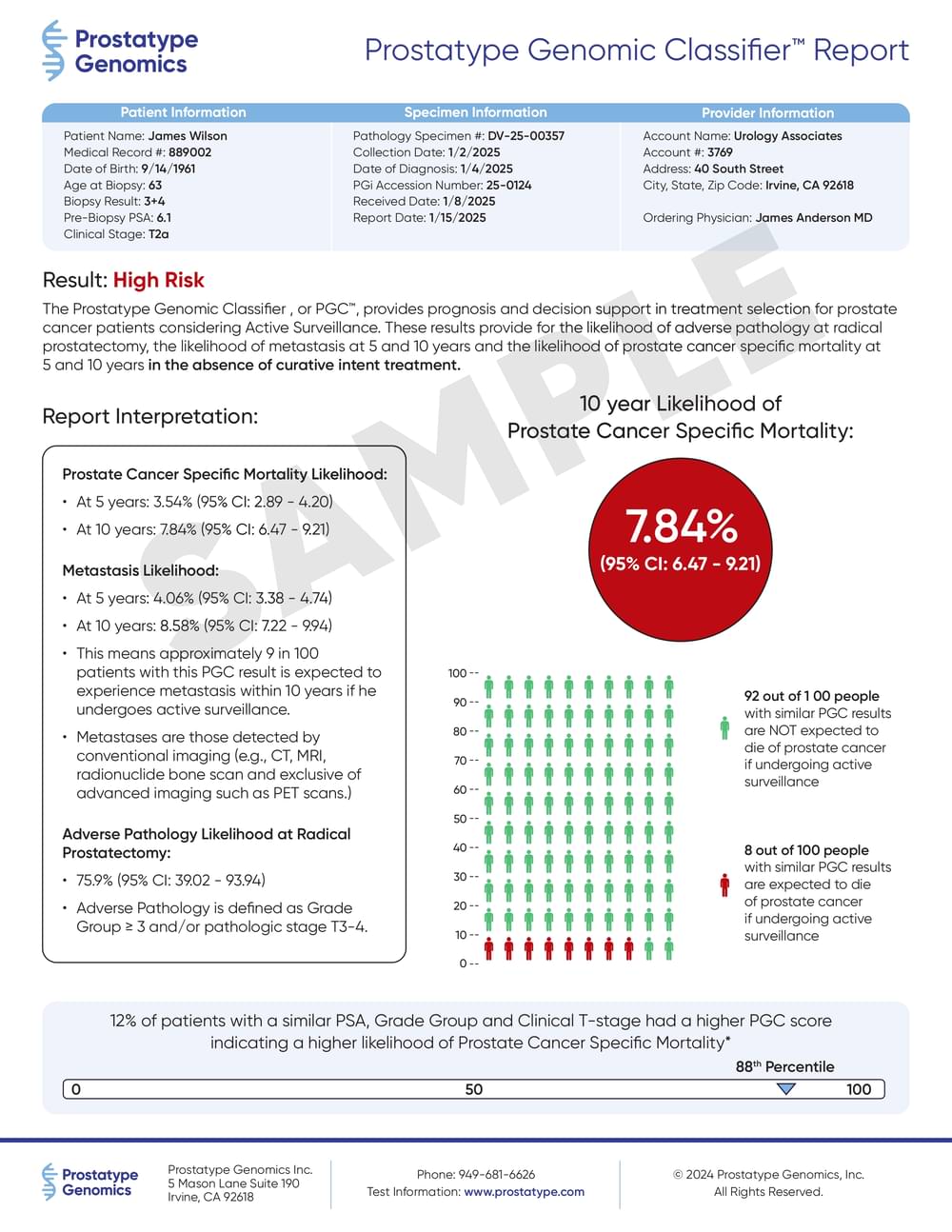
Sample Patient Report - High

The Prostatype Genomic Classifier Helps Ensure Your Patients Get the Right Treatment at The Right Time

Prostatype has been clinically validated on biopsy tissue to improve patient risk classification.

In a recent study, Prostatype accurately re-classified patients initially classified using D’Amico criteria into low, intermediate and high-risk risk groups based on their 10-year prostate cancer-specific mortality risk (p-value <0.0001).

Source: Validation of the prognostic value of a three-gene signature and clinical parameters-based risk score in prostate cancer patients. Sæmundsson et al, The Prostate 2023

Patient Risk Chart

The Prostatype Genomic Classifier Helps You Confidently Choose Active Surveillance

  • 0.93 AUC for 10 Yr PCa Mortality
  • 0.88 AUC for 10 Yr Metastatic Risk
  • 0.81 AUC for Adverse Pathology*

*Precise risk stratification of prostate cancer by P-score in an Asian population. See-Tong Pang et al

man in blue collared shirt

Prostatype Helps You Confidently Choose Active Surveillance

  • 0.93 AUC for 10 Yr PCa Mortality
  • 0.88 AUC for 10 Yr Metastatic Risk
  • 0.81 AUC for Adverse PathologyZ*

*Precise risk stratification of prostate cancer by P-score in an Asian population. See-Tong Pang et al

Prostatype® Outperforms Nomograms on Prediction of 10-year Prostate Cancer-Specific Mortality

Discovery & Development

An Expression Signature at diagnosis to estimate prostate cancer patients’ overall survival, Peng et al, PCPD 2014

Discovery & Development

Type of prostate cancer biopsy has limited impact on a gene signature analysis for the highly expressed genes IGFBP3 and F3 in prostate cancer epithelial cells, PLOS One 2014

Discovery & Development

Improving the prediction of prostate cancer survival by supplementing readily available clinical data with gene expression levels of IGFBP3 and F3 in formalin-fixed paraffin embedded core needle material, Peng et al, PLOS One 2016

Clinical Validation

A novel risk score (P-score) based on a three-gene signature for estimating the risk of prostate cancer-specific mortality, Söderdahl et al, Research and Reports in Urology 2022

Clinical Validation

Validation of the prognostic value of a three-gene signature and clinical parameters-based risk score in prostate cancer patients. Sæmundsson et al, The Prostate 2023

Clinical Validation

P-score in preoperative biopsies accurately predicts P-score in final pathology at radical prostatectomy in patients with localized prostate cancer, Röbeck et al, The Prostate 2023

Prostatype® Outperforms Nomograms on Prediction of 10-year Prostate Cancer-Specific Mortality

In a study of 316 patients analyzed with median follow-up of 8.8 yrs, the Prostatype P-Score improved the prediction of prostate cancer-specific death compared to CAPRA (p=0.05) and D’Amico (p=0.001):

  • P-Score (AUC=0.93, 95% CI:0.89-0.98)
  • CAPRA (AUC=0.88, 95% CI:0.80-0.96)
  • D’Amico (AUC=0.81, 95% CI:0.72-0.90)

Source: Validation of the prognostic value of a three-gene signature and clinical parameters-based risk score in prostate cancer patients. Sæmundsson et al, The Prostate 2023
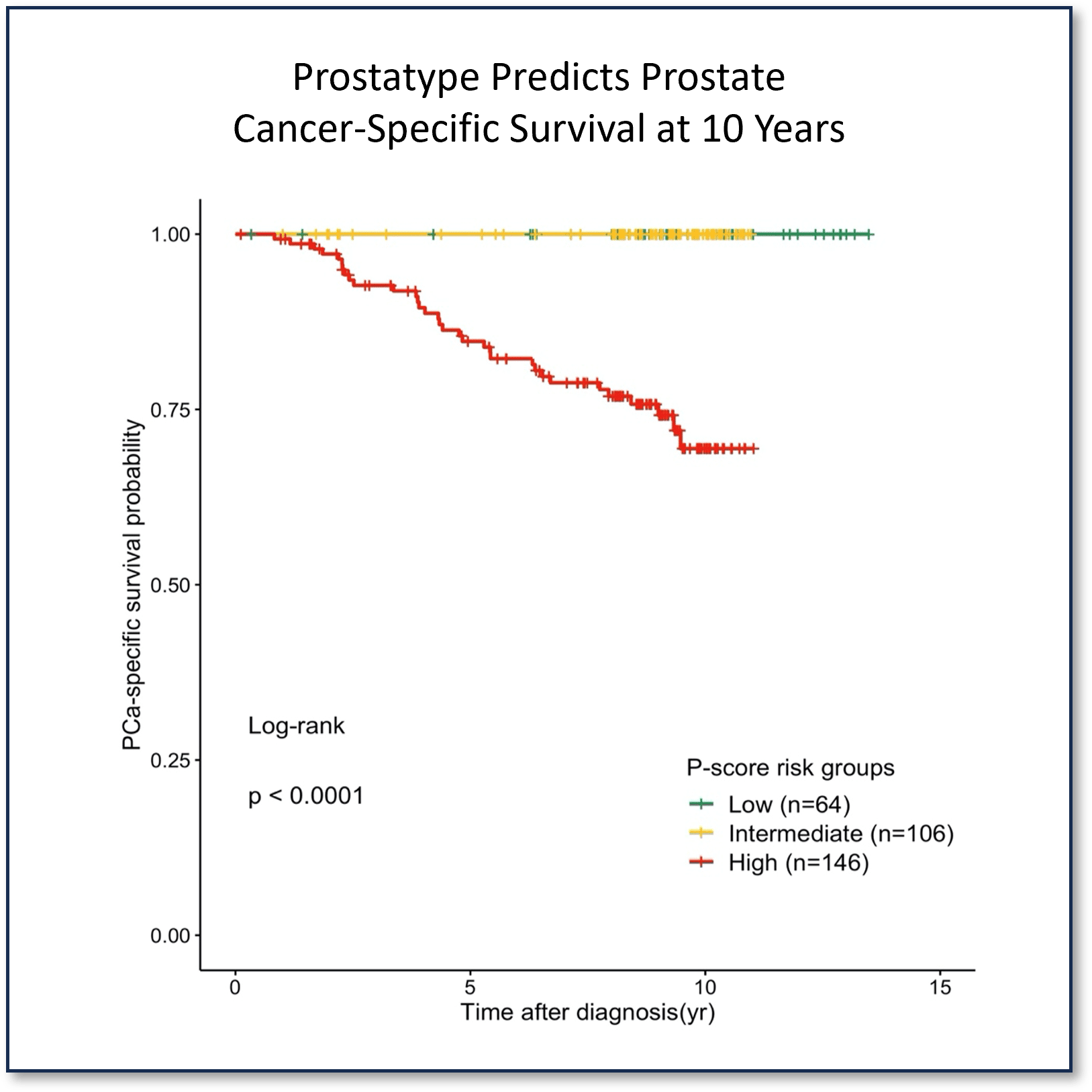
Prostatype® Helps Identify the Right Candidates for Active Surveillance

Prostatype accurately stratified all 316 patients into Low-, Intermediate- and High-risk groups for prostate cancer-specific survival at a significant p-value <0.0001.
None of the patients in the Prostatype low or intermediate risk groups group died from prostate cancer during follow-up.

Source: Validation of the prognostic value of a three-gene signature and clinical parameters-based risk score in prostate cancer patients. Sæmundsson et al, The Prostate 2023

Prostatype® Provides Insights into Your Patient’s Metastatic Risk

Prostatype accurately categorized all 316 patients into Low-, Intermediate- and High-risk groups for metastasis-free survival at a statistically significant p-value <0.0001.

Source: Validation of the prognostic value of a three-gene signature and clinical parameters-based risk score in prostate cancer patients. Sæmundsson et al, The Prostate 2023

Prostatype® Stratifies Patients at Risk for Harboring Adverse Pathology

Prostatype helps improve the assessment of patients considering active surveillance. Utilizing tissue from the core needle biopsy, Prostatype predicted:

  • pT-stage ≥T3a (odds ratio=1.3, 95% CI: 1.2-1.4, p<0.0001)
  • ISUP grades ≥3 (odds ratio=1.5, 95% CI: 1.3-1.9, p<0.0001) discovered in RP specimens

The median Prostatype values were significantly different in pT-stage groups (Chi-Square=22.2, p<0.0001) as well as in ISUP grades (Chi-Square=29.8, p<0.0001) USING Kruskal-Wallis analysis.

Source: Validation of the prognostic value of a three-gene signature and clinical parameters-based risk score in prostate cancer patients. Sæmundsson et al, The Prostate 2023

Prostatype® Genes and Technology Reported in Multiple Studies on Over 1,880 Patients

2026

Prostate Cancer Prostatic Dis. 2016 Jan; doi: 10.1038/s41391-025-01070-8

Validation of the Prostatype P-score for predicting prostate cancer specific mortality in a multiethnic U.S. veterans cohort

Alexandra Mack1, Trung Duong Tran2, Emelie Berglund3, Gerald L. Andriole3, Christopher Alley2, Anthony E. Sisk4, Iveth Estrada-Reyes1, Kara Bissell1, Haleigh Bellerose2, Aubrey Jarman2, Anna Hoffmeyer2, Michael Burns2, Sergio Sanders1, Eric Vail5, Andy Pao5, Raja Khurram5, Amal Ahmed5 and Stephen J. Freedland1

© The Author(s) 2026

Affiliations expand

Abstract

Background: The Prostatype® Test evaluates expression levels of three stem cell genes (IGFBP3, F3, and VGLL3), which are combined with PSA, stage, and grade to calculate P-score. Previous research found P-score accurately predicts prostate cancer (PC) specific mortality (PCSM) in patients with newly diagnosed clinically localized PC. We evaluated the performance of P-score to predict PCSM in a large, multiethnic cohort from the Veterans’ Administration (VA).

Methods: After pathologic review to ensure sufficient tumor tissue, formalin-fixed paraffin-embedded (FFPE) biopsy cores from patients with newly diagnosed PC at the Durham VA were sent to an academic medical center. There, cores were sectioned, RNA extracted, and reverse transcription quantitative polymerase chain reaction (RT-qPCR) tests conducted for IGFBP3, F3, VGLL3, and GAPDH (control). Results were combined with clinical data to generate P-scores. The association between P-score and PCSM was evaluated using c-index, Cox and Fine-Gray models, and decision curve analysis (DCA).

Results: Higher P-scores were significantly associated with a higher risk of PCSM (HR = 1.48 per 1 unit increase in P-score, 95% CI:1.20–1.84, p <0.001) and accurately estimated PCSM (c-index = 0.87). Adding clinical variables to P-score only incrementally improved accuracy. The DCA indicated P-score provided net clinical benefit for patients with PCSM risk between 5% and ~50%. As P-score strongly correlated with risk group, we tested the value of P-score in intermediate-risk patients specifically, where it significantly predicted PCSM (HR 1.43, 95% CI: 1.09–1.86, p = 0.009).

Conclusions: In this American cohort of veterans, P-score significantly predicted PCSM. Adding clinical variables minimally improved accuracy. Accuracy remained high in intermediate-risk patients, wherein there is arguably the greatest need for better risk stratification. Given P-scores can be generated rapidly in house using a standardized RT-qPCR assay, P-score represents a robust new tool to risk-stratify newly diagnosed patients for PC death, thereby minimizing mismatched treatments.

Prostate Cancer and Prostatic Diseases; https://doi.org/10.1038/s41391-025-01070-8

2023

Prostate. 2023 Mar 29. doi: 10.1002/pros.24530. Online ahead of print.

Validation of the prognostic value of a three-gene signature and clinical parameters-based risk score in prostate cancer patients

Arni Saemundsson 1Li-Di Xu 2Florian Meisgen 2Rong Cao 2Göran Ahlgren 3

Affiliations expand

Abstract

Background: The study aimed to validate the prognostic value of the Prostatype® risk score (P-score), which includes a three-gene signature and conventional risk factors, in a retrospective cohort.

Methods: All 716 patients diagnosed with prostate cancer from 2008 to 2010 at Skåne University Hospital, Sweden, were included. After excluding patients based on pathological and clinical eligibility criteria, RNA quality, and presence of metastases at diagnosis, a final cohort comprising 316 patients was further analyzed. Expression levels of three genes (IGFBP3, F3, and VGLL3) were measured in archived formalin-fixed paraffin-embedded core needle biopsies. The gene expression data were combined with clinical parameters (Gleason score, prostate-specific antigen, and clinical tumor stage) to calculate the P-score for each patient. Predictive performance of the P-score in terms of prostate cancer-specific mortality (PCSM), distant metastasis and adverse pathological outcomes were investigated.

Results: The P-score predicted both PCSM (hazard ratio [HR] = 1.6) and metastasis (HR = 1.46). The P-score had an area under curve (AUC) of 0.93 when predicting the PCSM risk at 10 years (95% confidence interval [CI]: 0.89-0.98), which was significantly better than both D’Amico (AUC: 0.81, 95% CI: 0.72-0.90, p < 0.001) and UCSF-CAPRA (AUC: 0.88, 95% CI: 0.80-0.96, p < 0.05). Decision curve analysis showed a higher net benefit of the P-score compared to both D’Amico and CAPRA. All three risk scores performed similarly in the prediction of distant metastases. For patients who underwent radical prostatectomy (RP), a higher P-score correlated with adverse pathological features such as pathologic tumor stage T3-4 (p < 0.0001) and ≥International Society of Urological Pathology grade group 3 (p < 0.0001).

Conclusions: Our findings provide evidence for the prognostic value of the P-score. The P-score predicted the risk for PCSM more accurately than the D’Amico and CAPRA scores. Performance was similar when predicting the risk for development of distant metastases within 10 years. Moreover, the P-score correlated with adverse pathological outcomes in RP specimens. Thus, the P-score could provide useful information for patients and their doctors to make informed decisions at the time of diagnosis.

2023

Prostate. 2023 Jun;83(9):831-839. doi: 10.1002/pros.24523. Epub 2023 Mar 20.

P-score in preoperative biopsies accurately predicts P-score in final pathology at radical prostatectomy in patients with localized prostate cancer

Pontus Röbeck 1Lidi Xu 2Dilruba Ahmed 2Anca Dragomir 3 4Pär Dahlman 5Michael Häggman 1Sam Ladjevardi 1

Affiliations expand

Abstract

Background: Prostate cancer (PCa) is a highly heterogeneous, multifocal disease, and identification of clinically significant lesions is challenging, which complicates the choice of adequate treatment. The Prostatype® score (P-score) is intended to guide treatment decisions for newly diagnosed PCa patients based on a three-gene signature (IGFBP3, F3, and VGLL3) and clinicopathological information obtained at diagnosis. This study evaluated association of the P-score measured in preoperative magnetic resonance imaging/transrectal ultrasound fusion-guided core needle biopsies (CNBs) and the P-score measured in radical prostatectomy (RP) specimens of PCa patients. We also evaluated the P-score association with the pathology of RP specimens. Furthermore, concordance of the P-score in paired CNB and RP specimens, as well as in index versus concomitant nonindex tumor foci from the same RP was investigated.

Methods: The study included 100 patients with localized PCa. All patients were diagnosed by CNB and underwent RP between 2015 and 2018. Gene expression was assessed with the Prostatype® real-time quantitative polymerase chain reaction kit and the P-score was calculated. Patients were categorized into three P-score risk groups according to previously defined cutoffs.

Results: For 71 patients, sufficient CNB tumor material was available for comparison with the RP specimens. The CNB-based P-score was associated with the pathological T-stage in RP specimens (p = 0.02). Moreover, the CNB-based P-score groups were in substantial agreement with the RP-based P-score groups (weighted κ score: 0.76 [95% confidence interval, 95% CI: 0.60-0.92]; Spearman’s rank correlation coefficient r = 0.83 [95% CI: 0.74-0.89]; p < 0.0001). Similarly, the P-score groups based on paired index tumor and concomitant nonindex tumor foci (n = 64) were also in substantial agreement (weighted κ score: 0.74 [95% CI: 0.57-0.91]; r = 0.83 [95% CI: 0.73-0.89], p < 0.0001).

Conclusions: Our findings suggest that the P-score based on preoperative CNB accurately reflects the pathology of the whole tumor, highlighting its value as a decision support tool for newly diagnosed PCa patients.

2022

Res Rep Urol . 2022 May 11;14:203-217. doi: 10.2147/RRU.S358169. eCollection 2022.

A Novel Risk Score (P-score) Based on a Three-Gene Signature, for Estimating the Risk of Prostate Cancer-Specific Mortality

Fabian Söderdahl 1Li-Di Xu 2Johan Bring 1Michael Häggman 3

Affiliations expand

Free PMC article

Abstract

Purpose: To develop and validate a risk score (P-score) algorithm which includes previously described three-gene signature and clinicopathological parameters to predict the risk of death from prostate cancer (PCa) in a retrospective cohort.

Patients and methods: A total of 591 PCa patients diagnosed between 2003 and 2008 in Stockholm, Sweden, with a median clinical follow-up time of 7.6 years (1-11 years) were included in this study. Expression of a three-gene signature (IGFBP3, F3, VGLL3) was measured in formalin-fixed paraffin-embedded material from diagnostic core needle biopsies (CNB) of these patients. A point-based scoring system based on a Fine-Gray competing risk model was used to establish the P-score based on the three-gene signature combined with PSA value, Gleason score and tumor stage at diagnosis. The endpoint was PCa-specific mortality, while other causes of death were treated as a competing risk. Out of the 591 patients, 315 patients (estimation cohort) were selected to develop the P-score. The P-score was subsequently validated in an independent validation cohort of 276 patients.

Results: The P-score was established ranging from the integers 0 to 15. Each one-unit increase was associated with a hazard ratio of 1.39 (95% confidence interval: 1.27-1.51, p < 0.001). The P-score was validated and performed better in predicting PCa-specific mortality than both D’Amico (0.76 vs 0.70) and NCCN (0.76 vs 0.71) by using the concordance index for competing risk. Similar improvement patterns are shown by time-dependent area under the curve. As demonstrated by cumulative incidence function, both P-score and gene signature stratified PCa patients into significantly different risk groups.

Conclusion: We developed the P-score, a risk stratification system for newly diagnosed PCa patients by integrating a three-gene signature measured in CNB tissue. The P-score could provide valuable decision support to distinguish PCa patients with favorable and unfavorable outcomes and hence improve treatment decisions.

2016

PLoS One. 2016 Jan 5;11(1):e0145545. doi: 10.1371/journal.pone.0145545. eCollection 2016.

Improving the Prediction of Prostate Cancer Overall Survival by Supplementing Readily Available Clinical Data with Gene Expression Levels of IGFBP3 and F3 in Formalin-Fixed Paraffin Embedded Core Needle Biopsy Material

Zhuochun Peng 1 2Karl Andersson 3 4Johan Lindholm 5Olga Dethlefsen 6Setia Pramana 6Yudi Pawitan 6Monica Nistér 1 5Sten Nilsson 1 7Chunde Li 1 7 2

Affiliations expand

Free PMC article

Abstract

Background: A previously reported expression signature of three genes (IGFBP3, F3 and VGLL3) was shown to have potential prognostic value in estimating overall and cancer-specific survivals at diagnosis of prostate cancer in a pilot cohort study using freshly frozen Fine Needle Aspiration (FNA) samples.

Methods: We carried out a new cohort study with 241 prostate cancer patients diagnosed from 2004-2007 with a follow-up exceeding 6 years in order to verify the prognostic value of gene expression signature in formalin fixed paraffin embedded (FFPE) prostate core needle biopsy tissue samples. The cohort consisted of four patient groups with different survival times and death causes. A four multiplex one-step RT-qPCR test kit, designed and optimized for measuring the expression signature in FFPE core needle biopsy samples, was used. In archive FFPE biopsy samples the expression differences of two genes (IGFBP3 and F3) were measured. The survival time predictions using the current clinical parameters only, such as age at diagnosis, Gleason score, PSA value and tumor stage, and clinical parameters supplemented with the expression levels of IGFBP3 and F3, were compared.

Results: When combined with currently used clinical parameters, the gene expression levels of IGFBP3 and F3 are improving the prediction of survival time as compared to using clinical parameters alone.

Conclusion: The assessment of IGFBP3 and F3 gene expression levels in FFPE prostate cancer tissue would provide an improved survival prediction for prostate cancer patients at the time of diagnosis.

2014

PLoS One. 2014 Oct 8;9(10):e109610. doi: 10.1371/journal.pone.0109610. eCollection 2014.

Operator dependent choice of prostate cancer biopsy has limited impact on a gene signature analysis for the highly expressed genes IGFBP3 and F3 in prostate cancer epithelial cells

Zhuochun Peng 1Karl Andersson 2Johan Lindholm 3Inger Bodin 4Setia Pramana 5Yudi Pawitan 6Monica Nistér 7Sten Nilsson 8Chunde Li 9

Affiliations expand

Free PMC article

Abstract

Background: Predicting the prognosis of prostate cancer disease through gene expression analysis is receiving increasing interest. In many cases, such analyses are based on formalin-fixed, paraffin embedded (FFPE) core needle biopsy material on which Gleason grading for diagnosis has been conducted. Since each patient typically has multiple biopsy samples, and since Gleason grading is an operator dependent procedure known to be difficult, the impact of the operator’s choice of biopsy was evaluated.

Methods: Multiple biopsy samples from 43 patients were evaluated using a previously reported gene signature of IGFBP3, F3 and VGLL3 with potential prognostic value in estimating overall survival at diagnosis of prostate cancer. A four multiplex one-step qRT-PCR test kit, designed and optimized for measuring the signature in FFPE core needle biopsy samples was used. Concordance of gene expression levels between primary and secondary Gleason tumor patterns, as well as benign tissue specimens, was analyzed.

Results: The gene expression levels of IGFBP3 and F3 in prostate cancer epithelial cell-containing tissue representing the primary and secondary Gleason patterns were high and consistent, while the low expressed VGLL3 showed more variation in its expression levels.

Conclusion: The assessment of IGFBP3 and F3 gene expression levels in prostate cancer tissue is independent of Gleason patterns, meaning that the impact of operator’s choice of biopsy is low.

2014

Prostate Cancer Prostatic Dis. 2014 Mar;17(1):81-90. doi: 10.1038/pcan.2013.57. Epub 2014 Jan 7.

An expression signature at diagnosis to estimate prostate cancer patients’ overall survival

Z Peng 1L Skoog 2H Hellborg 3G Jonstam 4I-L Wingmo 5M Hjälm-Eriksson 6U Harmenberg 6G C Cedermark 6K Andersson 7L Ahrlund-Richter 8S Pramana 9Y Pawitan 9M Nistér 2S Nilsson 6C Li 6

Affiliations expand

Free PMC article

Abstract

Background: This study aimed to identify biomarkers for estimating the overall and prostate cancer (PCa)-specific survival in PCa patients at diagnosis.

Methods: To explore the importance of embryonic stem cell (ESC) gene signatures, we identified 641 ESC gene predictors (ESCGPs) using published microarray data sets. ESCGPs were selected in a stepwise manner, and were combined with reported genes. Selected genes were analyzed by multiplex quantitative polymerase chain reaction using prostate fine-needle aspiration samples taken at diagnosis from a Swedish cohort of 189 PCa patients diagnosed between 1986 and 2001. Of these patients, there was overall and PCa-specific survival data available for 97.9%, and 77.9% were primarily treated by hormone therapy only. Univariate and multivariate Cox proportional hazard ratios and Kaplan-Meier plots were used for the survival analysis, and a k-nearest neighbor (kNN) algorithm for estimating overall survival.

Results: An expression signature of VGLL3, IGFBP3 and F3 was shown sufficient to categorize the patients into high-, intermediate- and low-risk subtypes. The median overall survival times of the subtypes were 3.23, 4.00 and 9.85 years, respectively. The difference corresponded to hazard ratios of 5.86 (95% confidence interval (CI): 2.91-11.78, P<0.001) for the high-risk subtype and 3.45 (95% CI: 1.79-6.66, P<0.001) for the intermediate-risk compared with the low-risk subtype. The kNN models that included the gene expression signature outperformed the one designed on clinical parameters alone.

Conclusions: The expression signature can potentially be used to estimate overall survival time. When validated in future studies, it could be integrated in the routine clinical diagnostic and prognostic procedure of PCa for an optimal treatment decision based on the estimated survival benefit.

Getting Started with The Prostatype Genomic Classifier

For more information about the Prostatype Genomic Classifier please contact us and our customer care team:

To view sample patient reports, please follow the link below:

To set up an account with Prostatype Genomics, please complete the following setup form provided within this link:

To order sample collection kits, please follow the link below:

To download and print a copy of the test requisition form, please follow the link below:

To obtain a copy of the specimen requirements and test submission instructions, please follow the link below:

Before Deciding Know His Prostatype!​